


Engine: LSA (supercharged)
Part of the GM LS (Gen III / IV) family.
Modeled power and torque
Modelled estimate, not a dyno result.
Modeled estimate, not a dyno measurement. Real results vary with fuel, weather, dyno type and build.
Stock is anchored to the factory rating (556 hp at 6100 rpm, 551 lb-ft at 3800 rpm); the curve shape between peaks is modeled. Pulley + bolt-ons + tune (pump fuel): Stock turbo/supercharger; gains limited by compressor and fuel system.
LSA (supercharged) data
- Load sensing
- MAF+MAP (blended / torque model)
- O2 sensor
- Not yet sourced
- Closed loop
- Not yet sourced
- Block
- aluminium (same block casting as LS9)
- Rods / pistons
- powder-forged steel · hypereutectic cast (high-silicon), block-mounted piston oil squirters
- Reported limit
- Not yet sourced
- Factory
- Gen IV short injector, EV6 USCAR · 620 cc/min
- Impedance
- high (saturated)
- Direct-fit upgrades
- 5 maker-listed
- Knock
- GM 12623730 (repl 12570125; superseded by 12739206)
- MAP / MAF
- GM 55567257 (repl 12592525)
- O2 (upstream)
- GM 12617332
Factory ECU
From the factory ECU each listed harness plugs into. The factory ECU is unplugged, not modified. Check the label and part number on your own ECU before ordering.
- ECU family
- GM E67 (LSA); LS9 ECM type unconfirmed
- Applies to
- 2009-15 CTS-V LSA, 2012-15 Camaro ZL1, Corvette ZR1 LS9; auto/manual
E67 sourced for LSA only; LS9 (ZR1) ECM type not confirmed - harness may cover two ECM types.
Factory ECU pinout: pending
No OEM pin table is in our library yet for the LSA (supercharged) factory ECU. We only publish pinouts drawn from the OEM service manual or the maker's own documents, and none has been sourced yet. Until then, wire from the harness maker's instructions or the factory service manual.
Plug-and-play harness
No Haltech S3 plug-in harness is listed for this vehicle, but a Boomslang adapter harness is: it plugs into the factory ECU connector on one side and the S3 pinout on the other, so the ECU2 replaces the factory ECU without cutting the loom. Nothing is written to the factory ECU. Pin-compatible per the published S3 pinout, not yet fit-tested.
| Maker | Harness | Fits | Link | |
|---|---|---|---|---|
 | Manual 2010 - 2015 Chevrolet Camaro LSABF29999-S3 | 2009-15 CTS-V LSA, 2012-15 Camaro ZL1, Corvette ZR1 LS9; auto/manual | $1,445 | Maker ↗ |
| Wire-in | Universal flying lead or re-terminated factory harness | Any engine (terminate to ECU2's two Superseal 34 connectors) | Universal harness from $405 | Maker ↗ |
Boomslang plug-and-play harness for Haltech Nexus S3 - Manual 2010 - 2015 Chevrolet Camaro LSA
- Plugs into
GM E67 ECM (LSA: CTS-V / Camaro ZL1; also Corvette LS9)
- ECU
- GM E67 (LSA); LS9 ECM type unconfirmed
- Confidence
- low
E67 sourced for LSA only; LS9 (ZR1) ECM type not confirmed - harness may cover two ECM types.
Sources: E-1454
- Fits
- 2009-15 CTS-V LSA, 2012-15 Camaro ZL1, Corvette ZR1 LS9; auto/manual
- SKU
- BF29999-S3
- Maker fitment
- Cadillac CTS-V LSA; Chevrolet Camaro LSA; Chevrolet Corvette LS9 (Auto/Manual); selector years 2009-2015; SKU label: Manual 2010 - 2015 Chevrolet Camaro LSA
- Maker notes
- separate SKUs exist for other Nexus models (-S2/-R3/-R5/-T1/-T2); LSA manual
Haltech and Boomslang are trademarks of their respective owners. GAINS is not affiliated with or endorsed by them.
Your GAINS system for this car · pre-release
ECU2 for the CTS-V 2nd gen
Planned with the same rules as the configurator for this car's 8 cyl · port injection · drive-by-wire. The factory ECU is unplugged and replaced; nothing is written to it.

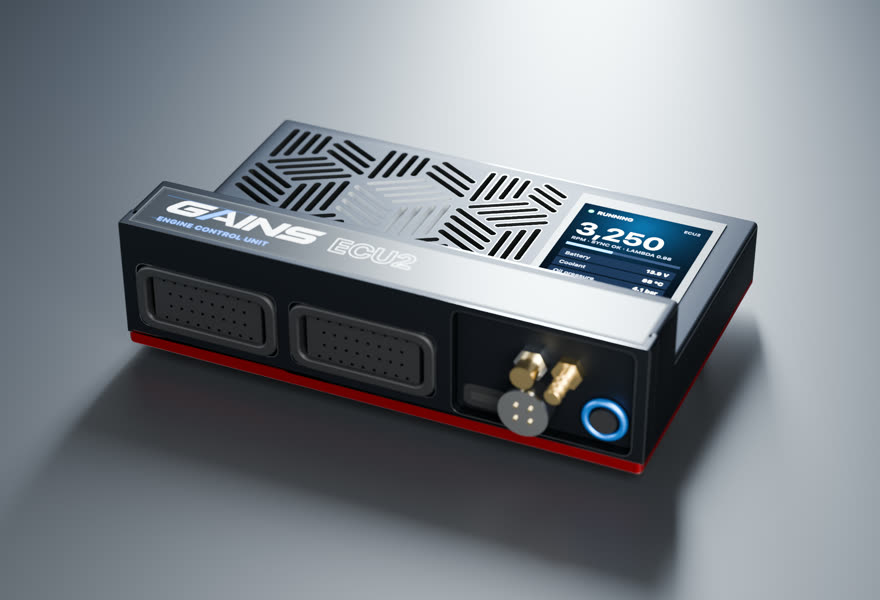
- Price TBA
ECU2Engine controller
8 cyl · port injection · drive-by-wire
Full sequential fuel and spark for this 8-cylinder, and its electronic throttle, with the wideband built in.
in designEst. availability: April 2027
Add PDM2 to switch and protect chassis loads (pumps, fans, lights, accessories). Add it in the configurator →
Track days? Add the Telemetry Dongle Pro for 25 Hz GPS lap timing; it plugs into the OBD-II port, and your phone is the dash. Plan it in the configurator →
What you get
- A screen on the ECUA 2.4-inch, 500-nit display in the lid, readable in a footwell.
- Faults in plain words"Coolant temp sensor open circuit.
- Drive-by-wire built inFour half-bridges run up to two electronic throttles, with pedal and throttle sensors on the ECU's own inputs and a windowed watchdog that cuts the motors in hardware on a fault.
- S3-style harnessesConnector A and C pin functions follow the published Nexus S3 wiring diagram.
- Powered CAN portA sealed 4-pin port on the insert carries 12 V and CAN for the PDM2 and GAINS displays: one cable per accessory.
- GAINS insideThe on-ECU adaptive layer, the app, logging and your limits.
How it wires in
- Haltech S3 plug-in harnessNone listed for this car
- Factory-connector → S3 adapter1 listed · from $1,445 USD listBF29999-S3
- Wire-inAlways possible
Pin-compatible per the published S3 pinout, not yet fit-tested. Every harness option for this car ↓
ECU2 is in design; specifications may change. All GAINS hardware is pre-release concept design; nothing is for sale yet and no application is validated on a vehicle. Harness fitment is from published pinouts and not yet fit-tested.
Swap guides
The LSA (supercharged) family in other cars
How GAINS approaches the CTS-V 2nd gen
Our starting method for this engine, as foundations first: get it running and drivable, then learn fuel, then the hardware-specific strategies. It is a methodology outline, not a validated calibration.
- 1Base map and first startplanned
Start from displacement, injector data and the sensors fitted, then let the first-start learner settle cranking, idle and warm-up before any load work. The goal is a safe, running engine, not a finished calibration.
- 2Lambda targets and VE learningclosed loop on GAINS ECUs
Air-fuel targets come from your goal (street, track, economy). The ECU then learns its fuel table cell by cell from the onboard wideband inside a signed envelope, and you approve promoting what it learned into the base map.
- 3Boost controlgated
A closed-loop boost target by gear and goal, held inside the authority envelope, with knock protection active at boost. Raising boost authority is never automatic; it stays an expert or dyno decision.
- 4Drivability foundationsplanned
Pedal map, tip-in and decel fuel, idle control, cold start and warm-up enrichment: the tables tuners spend hours on after the main map. Each is a strategy in the knowledge engine with its own limits.
- 5Factory load sensingfactory reference
What the factory ECU measures load with: MAF+MAP (blended / torque model) (low confidence)
- 6Wideband sensorhardware
factory O2 type not yet sourced; plan on a Bosch LSU 4.9 for the GAINS ECU's built-in controller
- 7Bottom end and head sealingfactory reference
Reported: Press comparisons say the LSA was built for lower cylinder pressures than the LS9, with hypereutectic pistons and powder-metal rods in place of the LS9's forged pistons and titanium rods. The pistons are the commonly implied first limit (whichcar/4x4australia). (medium confidence) Limits depend on tune quality, fuel, rpm and condition and are not guaranteed.
GAINS on the CTS-V 2nd gen
ECU2
Designed so your phone is the laptop, keypad and dash
The GAINS app is designed to handle tuning, logging, gauges and switch inputs over Bluetooth, so the system needs no separate CAN keypad or display. Keypad, dash and logging views are planned; the iOS prototype runs on simulated data today.
Wideband, IMU and logging built in
An onboard Bosch LSU 4.9 wideband controller, a 6-axis IMU and onboard logging are designed into the ECU rather than sold as add-on modules.
Modular, so you buy what the engine needs
This engine runs on ECU2. PDM2 (power, body and gearbox) is optional and connects over ECU2's powered CAN port; the Telemetry Dongle Pro adds GPS lap timing from the OBD-II port.
Calibration that keeps learning
Instead of a fixed map that drifts as parts and conditions change, the ECU keeps adapting its fuel trims within limits you can see and approve in the app.
Adaptive tuning strategies
- VE learning closed loop on GAINS ECUs
Learns the fuel table from the onboard wideband as you drive, cell by cell, inside a signed authority envelope. Learned trims are promoted into the base map without a step in fuelling.
- Goal-based lambda targets closed loop on GAINS ECUs
Sets air-fuel targets from your goal (economy, response, power, safety margin) instead of a single fixed table.
- Knock protection protection
Listens for knock on a dedicated knock processor, pulls timing at once and restores it slowly. It only ever reduces advance.
- Warm-up, cranking, idle and transient fuel planned
The same learning approach applied to the tables tuners spend hours on after the main map is done.
- Spark advance and boost authority gated
Widening ignition advance or boost is never automatic. It stays an expert or dyno decision until validated knock detection exists for the engine family.
Already running another ECU? In advisor mode the same strategies read your logs and recommend exact table changes with the reasoning, which you apply in your ECU vendor's own software.
GAINS hardware is pre-release concept design. Simulated results only; nothing is validated on a vehicle yet.
Catalog data and evidence
- Catalog data, not yet expert-reviewed.
- No vehicle photos: illustrations only until licensed imagery is available.
- E-934 Boomslang identity (sourced, high confidence)
- E-935 Boomslang S3 catalog size (sourced, high confidence)
- E-900 Haltech Nexus S3 catalog (sourced, high confidence)
- E-941 S3 engine harness availability (inferred, medium confidence)
- E-1454 GM E38/E67 (supported, medium confidence)