

Generations and variants
| Variant | Years | Litres | Cyl | Induction | Injection | Cam control | Ignition | Swap demand |
|---|---|---|---|---|---|---|---|---|
| Barra 4.0 NA | 2002-16 | 4 | I6 | NA | Port injection | twin VCT (from BF) | Coil-on-plug | High |
| Barra 4.0 Turbo (XR6T / F6) | 2002-16 | 4 | I6 | T | Port injection | twin VCT (from BF) | Coil-on-plug | High |
Variants
Codes, dimensions and years side by side.
| Code | Displacement | Bore × stroke | Compression | Years | Applications |
|---|---|---|---|---|---|
| Barra 182456 | 3984 cc | 92.26 x 99.31 mm | 9.7:1 | 2002-2005 | BA Falcon/Fairmont/Fairlane, SX Territory182 kW @ 5000 rpm, 380 Nm @ 3250 rpm. Dual VCT with dependent (equal) phasing over a 60 degree range, coil-on-plug, drive-by-wire throttle, knock sensing. |
| Barra 19068 | 3984 cc | 92.26 x 99.31 mm | 10.3:1 | 2005-2008 | BF Falcon, SY Territory190 kW @ 5250 rpm, 383 Nm @ 2500 rpm. Introduced independent dual VCT. |
| Barra 19569 | 3984 cc | 92.26 x 99.31 mm | 10.3:1 | 2008-2016 | FG and FG X Falcon, SZ Territory195 kW @ 6000 rpm, 391 Nm @ 3250 rpm, rated on 91 RON |
| Barra 240T146 | 3984 cc | 92.26 x 99.31 mm | 8.7:1 | 2002-2005 | BA Falcon XR6 Turbo240 kW @ 5250 rpm, 450 Nm @ 2000-4500 rpm. Garrett GT3582R at about 6 psi peak boost, air-to-air intercooler, dished pistons, 4.0 bar peak fuel pressure. Published as DEPS (dependent) dual VCT. |
| Barra 245T2611 | 3984 cc | 92.26 x 99.31 mm | 8.7:1 (Australian Car Reviews) / 8.9:1 (Wikipedia) | 2005-2008 (BF); 2005-2011 (SY Territory Turbo) | BF Falcon XR6 Turbo, SY Territory Turbo245 kW @ 5250 rpm, 480 Nm @ 2000-4500 rpm. GT3582R. DIPS independent dual VCT and an additional knock sensor. The BF Mk II received stronger valve springs and conrods. |
| Barra 270T (FPV)612 | 3984 cc | 92.26 x 99.31 mm | 8.7:1 | 2004-2009 | FPV F6 Typhoon/Tornado (BA Mk II/BF), FPV F6X Territory270 kW @ 5250 rpm, 550 Nm. Based on the GT3582R turbocharged engine. |
| Barra 270T (FG)3611 | 3984 cc | 92.26 x 99.31 mm | 8.8:1 | 2008-2016 | FG and FG X Falcon XR6 Turbo, G6E Turbo270 kW @ 5250 rpm, 533 Nm @ 2000 rpm with a transient overboost of about 10 percent. Smaller Garrett GT3576R at about 10 psi, larger bar-and-plate intercooler, revised fast-burn head and exhaust manifold, twin knock sensors. |
| Barra 310T611 | 3984 cc | 92.26 x 99.31 mm | 8.47:1 | 2008-2014 | FPV FG F6310 kW @ 5500 rpm, 565 Nm. Larger turbo and intercooler, larger injectors, about 1 bar boost. |
| Barra 325T (Sprint)611 | 3984 cc | 92.26 x 99.31 mm | 8.8:1 | 2016 | FG X Falcon XR6 Sprint325 kW @ 6000 rpm and 576 Nm, with transient overboost to 370 kW / 650 Nm. Uses the 310T turbo and injectors on the 8.8:1 XR6T engine, with a larger intercooler and a carbon-fibre intake. |
| Barra E-Gas / EcoLPi64 | 3984 cc | 92.26 x 99.31 mm | 10.7:1 (BA E-Gas), 10.3:1 (BF/FG E-Gas), 12.0:1 (EcoLPi) | 2002-2014 | BA-FG Falcon (LPG-only fleet/taxi variants)E-Gas uses a Vialle vapour (venturi) system. EcoLPi (2011+) uses liquid-phase LPG injection: 198 kW, 409 Nm. |
Valvetrain
DOHC, 4 valves per cylinder, single-stage roller chain, roller finger followers with hydraulic lash adjusters
Sourced · medium31Rocker ratio 2.04:1, cam lobe lift 5.39 mm, valve lift 11.00 mm, intake valve 35.0 mm, exhaust valve 32.0 mm
Sourced · medium123Aisin vane-type phaser on each camshaft, 60 degree range (published as 10 degrees advance / 50 degrees retard)
Sourced · medium134Because BA engines phase both cams together and BF and later engines phase them independently, cam control calibrations and trigger handling do not transfer directly between BA and BF/FG engines. A BA head or cam set fitted to a later engine, or the reverse, needs its VCT control reconsidered.
Valve float from the stock springs is a known boost-related limit, more so on pre-BF Mk II engines. Stiffer springs are a standard part of any significant boost increase.
Fuel system
No OEM source for stock injector flow, impedance or connector type was found in this research, so none is listed. Measure or identify the injector by part number before calibrating. FPV 310T and 325T engines use larger injectors than the 270T.
Fuel pump and injector headroom, not the block, set the power ceiling of a mildly modified turbo Barra. Check rail pressure and injector duty under load before raising boost.
Ignition
Cylinders are numbered 1 to 6 from the front of the engine, the usual inline-six convention. As boost rises, coil-on-plug spark energy and plug gap become limits. Closer plug gaps and colder plugs are standard practice on high-boost builds.
Crank and cam triggers
- Crankshaft position sensor plus camshaft position sensors. Replacement-part catalogues list the sensor locations as the timing-cover area on BA-FG engines
- One FG listing names a left-hand intake camshaft position.
Crank and cam target tooth counts, and the sensor types (VR or Hall), are not given here because no OEM or acceptable independent source was found during this research. Get them from the Ford BA/BF/FG Falcon workshop manual (engine controls: CKP and CMP sensor descriptions), or by scope-capturing a running engine. Because both cams are phased, the cam signals move relative to crank as VCT operates, and sync logic must allow for that.
Sensors
Australian Car Reviews describes the turbo engines' fuelling as speed-density. MAF upgrades are also widely discussed in the XR6 Turbo community. The exact factory load strategy for each PCM generation should be confirmed in the calibration itself before you rescale anything.
Factory engine management
The factory PCM is reflashable on BA (2002-05), BF (2005-08) and FG/FG X (2008-17) Falcon and SX-SZ Territory petrol, with commercial tools such as PCMTec. EcoBoost Falcon and diesel Territory are not covered.
Sourced13BA/BF PCMs can be set to ignore PATS and to take vehicle speed from a dedicated output-shaft speed sensor. They then run without the ABS or TCM modules, but the BCM and ICC no longer work.
Sourced · medium14FG PCMs take vehicle speed only over CAN from the ABS or TCM and ignore the speed-source setting. Without an ABS module, the engine will not run correctly unless the speed-dependent tables are tuned out or a CAN emulator supplies the messages.
Sourced · medium14The difference between BA/BF and FG PCMs is the main planning decision for any Barra swap. A BA/BF PCM can be made largely self-contained. An FG PCM expects a live CAN network carrying ABS and TCM data, so swaps either carry those modules across, emulate them, or replace the controller.
Timing considerations
The Barra is a long-stroke, 99.31 mm engine with a large bore, so it is torque-rich and knock-limited at low to mid rpm under high load. That is where factory turbo calibrations already make peak torque from about 2000 rpm. When boost goes up, the knock-limited zone grows downward in rpm. Build boost gradually by gear and rpm instead of targeting a flat high number.
Factory knock control on turbo engines retards spark per event, using multiple correction modes, and relies on the boost sensor and charge temperature. Compression differences matter: an 8.8:1 FG 270T or 325T is more knock-sensitive at a given boost than an 8.47:1 310T. E85 is widely used on the turbo engines because its knock resistance allows much more boost and spark, but it needs much greater fuel flow.
More detail · 1 more paragraph
Safe practice is to change spark in small steps, log knock activity and retard on every pull, confirm repeatability on a load-bearing dyno, and keep charge temperature stable between pulls. Never use factory knock retard as a substitute for a knock-safe base map.
Tuning notes
About 250 kW at the wheels for NA rods, and about 350 kW (475 hp) for turbo rods
Low confidence12About 600 kW is cited as realistic with stronger valve springs, a larger turbo and a tune. Beyond that, a built bottom end and lower compression are recommended.
Low confidence10Tune, then exhaust (downpipe on turbo), then intercooler, then turbo upgrade with injectors, fuel pump, head studs and valve springs
Low confidence12The turbo engines respond strongly to boost because the iron block, cross-bolted mains and conservative factory boost leave large margins. Valve springs, rods and head-gasket clamping are the usual first upgrades as power rises. Head studs are standard once boost is well above factory levels.
The rods are the first internal part reported to fail, and they fail from torque, not rpm. Limiting low-rpm torque with gear- or rpm-based boost control is the main protective measure on a stock bottom end.
Weak points
Common swaps
For a donor-PCM swap, pick the PCM generation for its CAN behaviour. BA/BF PCMs can run standalone with PATS disabled and a wired output-shaft speed sensor. FG/FG X PCMs need ABS or TCM CAN messages, or a CAN emulator. Many swaps instead use a standalone controller that can run six coil-on-plug outputs, sequential injection, two independent VCT channels and boost control.
The ZF 6HP26 automatic and the six-speed manuals (T56 on BA Mk II/BF turbo, TR-6060 on FG) are the common donor transmissions. Whichever transmission is used, plan where the PCM's vehicle-speed and torque-reduction signals will come from.
Vehicles with this engine

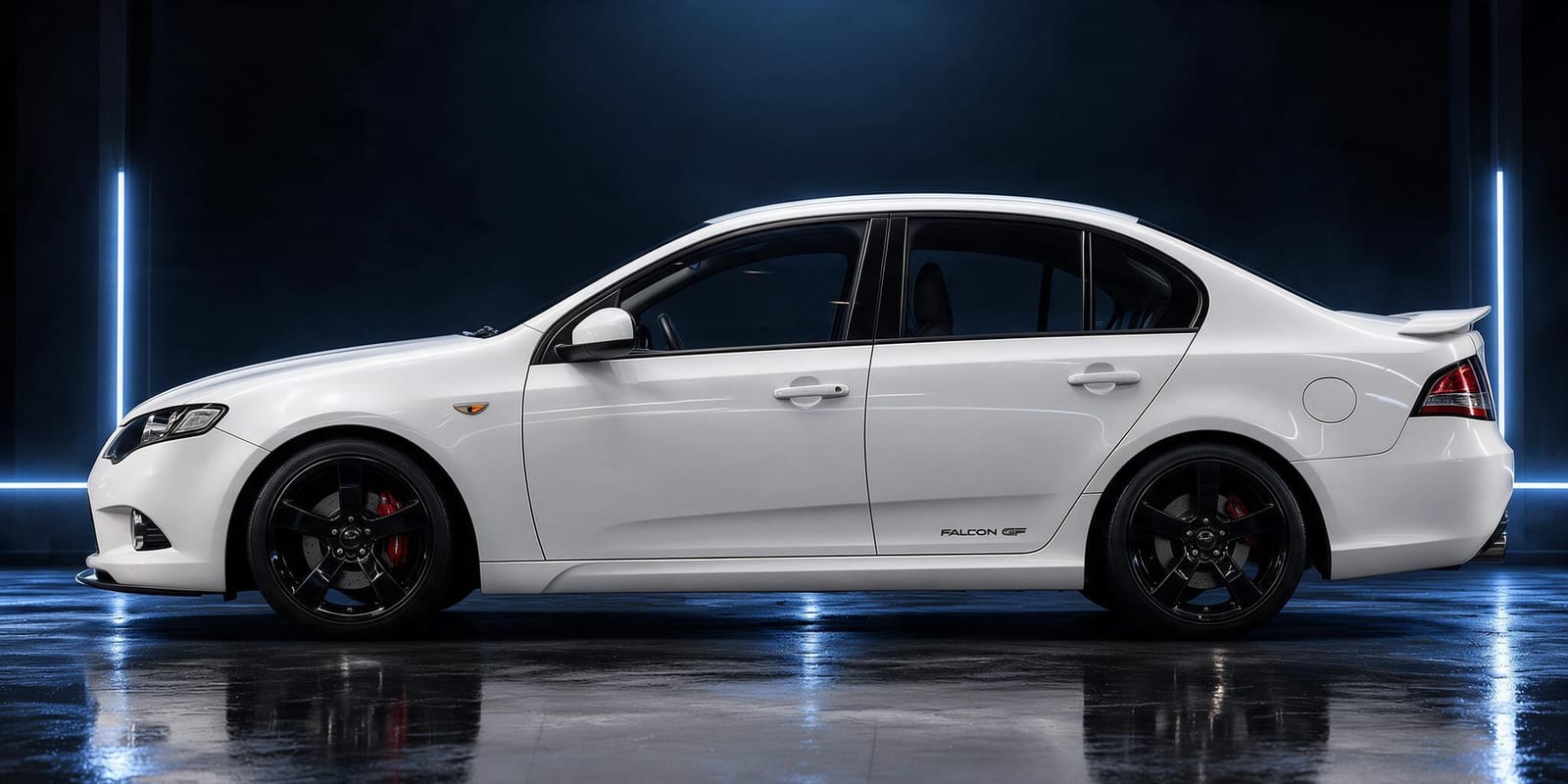
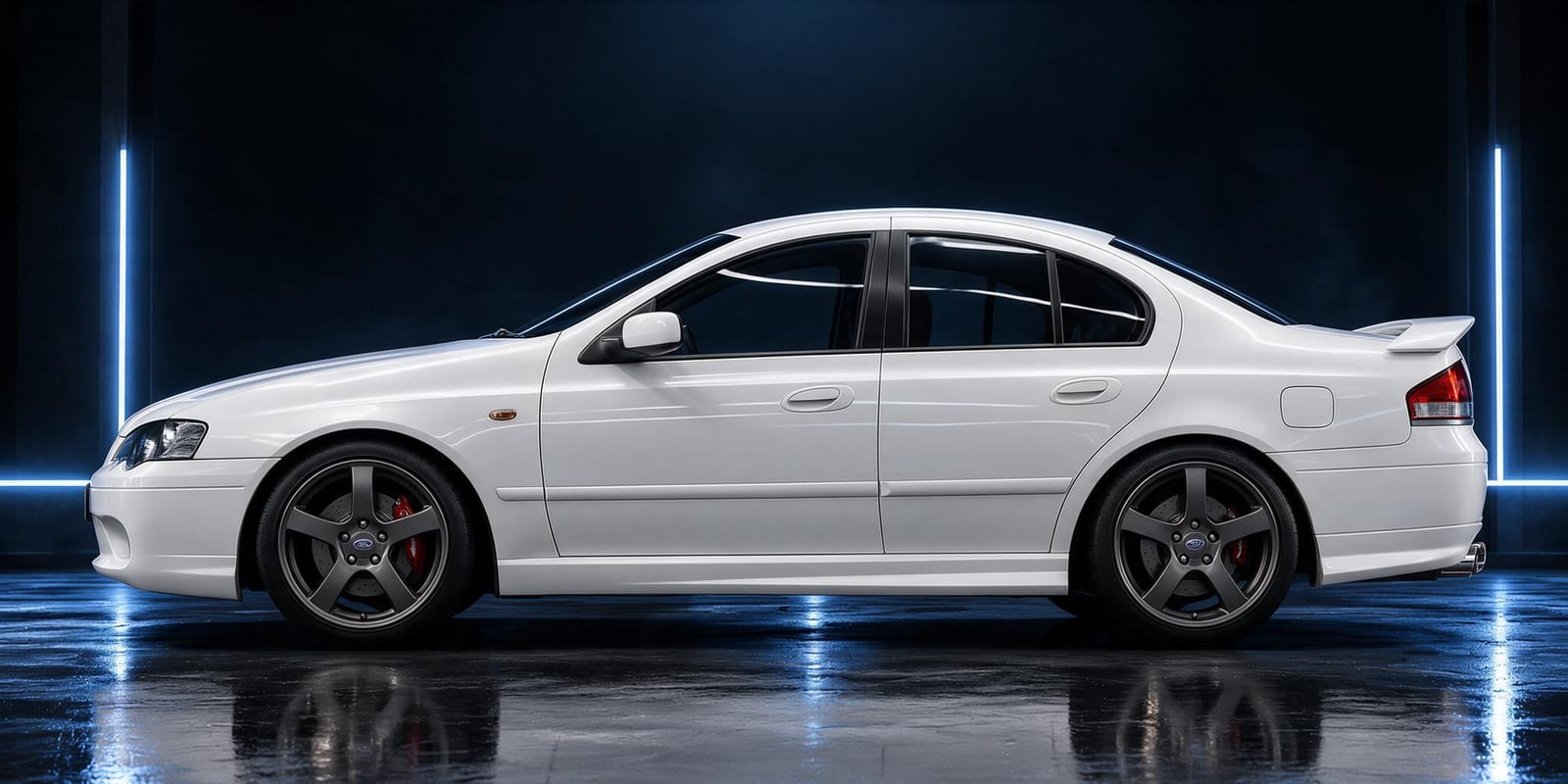
GAINS on the Ford Barra
ECU2
Designed so your phone is the laptop, keypad and dash
The GAINS app is designed to handle tuning, logging, gauges and switch inputs over Bluetooth, so the system needs no separate CAN keypad or display. Keypad, dash and logging views are planned; the iOS prototype runs on simulated data today.
Wideband, IMU and logging built in
An onboard Bosch LSU 4.9 wideband controller, a 6-axis IMU and onboard logging are designed into the ECU rather than sold as add-on modules.
Modular, so you buy what the engine needs
This engine runs on ECU2. PDM2 (power, body and gearbox) is optional and connects over ECU2's powered CAN port; the Telemetry Dongle Pro adds GPS lap timing from the OBD-II port.
Calibration that keeps learning
Instead of a fixed map that drifts as parts and conditions change, the ECU keeps adapting its fuel trims within limits you can see and approve in the app.
Adaptive tuning strategies
- VE learning closed loop on GAINS ECUs
Learns the fuel table from the onboard wideband as you drive, cell by cell, inside a signed authority envelope. Learned trims are promoted into the base map without a step in fuelling.
- Goal-based lambda targets closed loop on GAINS ECUs
Sets air-fuel targets from your goal (economy, response, power, safety margin) instead of a single fixed table.
- Knock protection protection
Listens for knock on a dedicated knock processor, pulls timing at once and restores it slowly. It only ever reduces advance.
- Warm-up, cranking, idle and transient fuel planned
The same learning approach applied to the tables tuners spend hours on after the main map is done.
- Spark advance and boost authority gated
Widening ignition advance or boost is never automatic. It stays an expert or dyno decision until validated knock detection exists for the engine family.
Already running another ECU? In advisor mode the same strategies read your logs and recommend exact table changes with the reasoning, which you apply in your ECU vendor's own software.
GAINS hardware is pre-release concept design. Simulated results only; nothing is validated on a vehicle yet.
Frequently asked
What is the bore and stroke of the Barra 4.0?
92.26 mm bore and 99.31 mm stroke, for 3984 cc, on all Barra I6 variants.63
What is the difference between the 240T, 245T and 270T?
The 240T (BA) made 240 kW on a GT3582R at about 6 psi with DEPS cam phasing. The 245T (BF) added independent dual VCT (DIPS), an extra knock sensor and 245 kW. The FG 270T moved to a smaller GT3576R at about 10 psi, a revised head, a larger intercooler, 8.8:1 compression and 270 kW / 533 Nm. The earlier FPV 270T kept the GT3582R.1236
Does the Barra have variable cam timing?
Yes. Vane phasers are fitted to both camshafts with about 60 degrees of range. BA engines phase intake and exhaust together (DEPS); BF and later phase them independently.128
How much power can a stock Barra turbo bottom end handle?
Estimates vary. A conservative community figure for the stock turbo rods is around 350 kW (475 hp). Some publications cite around 600 kW with springs, turbo and tune on a stock bottom end. Rods and head clamping are the usual failure points.1210
Can a Falcon PCM run a Barra in a swap without the rest of the car?
A BA/BF PCM can, with PATS disabled and a wired speed sensor, at the cost of BCM/ICC function. An FG/FG X PCM expects vehicle speed over CAN from ABS or TCM, so it needs those modules, a CAN emulator, or a calibration that tunes out speed-dependent behaviour.14
Sources
Numbered as cited above. Hover or tap a citation chip to preview it.
- Ford Barra 240T turbo engine · Australian Car Reviews · press · retrieved 2026-10-25
- Ford Barra 245T turbo engine · Australian Car Reviews · press · retrieved 2026-10-25
- Ford Barra 270T turbo engine · Australian Car Reviews · press · retrieved 2026-10-25
- Ford BA Falcon: responsive 4.0-litre six-cylinder engine (BA range engines) · Australian Car Reviews · press · retrieved 2026-10-25
- Barra 182 I6 · Australian Car Reviews · press · retrieved 2026-10-25
- Ford Barra engine · Wikipedia · community · retrieved 2026-10-25
- Ford Falcon (BA) · Wikipedia · community · retrieved 2026-10-25
- Ford Falcon (BF) · Wikipedia · community · retrieved 2026-10-25
- Ford Falcon (FG) · Wikipedia · community · retrieved 2026-10-25
- Ford's Barra engine: Everything you need to know · CarsGuide · press · retrieved 2026-10-25
- Extraordinary Engines: Ford Barra Turbo · Retro Rides · press · retrieved 2026-10-25
- Ultimate Ford Barra Upgrades Guide · 8020 Automotive · community · retrieved 2026-10-25
- PCMTec General Fact Sheet · PCMTec · vendor-doc · retrieved 2026-10-25
- How to run PCM standalone (engine swap): PATS disable and speed source setup · PCMTec · vendor-doc · retrieved 2026-10-25
- Tridon camshaft / crank angle sensor listings for Ford Falcon BA-FG · Superspares (Tridon) · vendor-doc · retrieved 2026-10-25