

Generations and variants
| Variant | Years | Litres | Cyl | Induction | Injection | Cam control | Ignition | Swap demand |
|---|---|---|---|---|---|---|---|---|
| 2JZ-GTE (non-VVT-i) | 1993-97 | 3 | I6 | TT | Port injection | none | Wasted spark | High |
| 2JZ-GTE VVT-i | 1997-02 | 3 | I6 | TT | Port injection | VVT-i (intake) | Coil-on-plug | High |
| 2JZ-GE (NA, VVT-i 1998+) | 1991-07 | 3 | I6 | NA | Port injection | VVT-i (later) | Coil-on-plug | High |
| 1JZ-GTE (twin / single VVT-i) | 1990-07 | 2.5 | I6 | T | Port injection | VVT-i (1996+) | Coil-on-plug | High |
Variants
Codes, dimensions and years side by side.
| Code | Displacement | Bore × stroke | Compression | Years | Applications |
|---|---|---|---|---|---|
| 1JZ-GE (non-VVT-i)122 | 2.5 L (2,491 cc) | 86.0 x 71.5 mm | 10.0:1 | 1990-c.1996 | Chaser, Cresta, Crown, Mark II (Japan)Dual-stage intake manifold; automatic-only applications per AutoSpeed. |
| 1JZ-GE VVT-i1213 | 2.5 L (2,491 cc) | 86.0 x 71.5 mm | 10.5:1 | c.1995/96-2007 | Chaser, Cresta, Crown, Mark II and later Toyota sedans (Japan)AutoSpeed dates VVT-i to 1996 and quotes a 0.5 point compression rise; Wikipedia dates it to 1995. |
| 1JZ-GTE (twin turbo)1223 | 2.5 L (2,491 cc) | 86.0 x 71.5 mm | 8.5:1 | 1990-1996 | Supra 2.5GT Twin Turbo (JZA70), Chaser/Cresta/Mark II, Soarer GT (Japan)Twin CT12A turbochargers in parallel with ceramic turbine wheels; 206 kW quoted. |
| 1JZ-GTE VVT-i (single turbo)212 | 2.5 L (2,491 cc) | 86.0 x 71.5 mm | 9.0:1 | 1996-2007 | Soarer, Chaser, Cresta, Mark II (1996 on), later Crown, Verossa, Mark II BlitToyota's paper describes a single CT15B ceramic turbo replacing the CT12A twins, a two-valve electronically controlled throttle and VVT-i; AutoSpeed calls the turbo a CT20, so treat the turbo model as unverified. Peak torque 378 Nm at 2400 rpm per Toyota. |
| 2JZ-GE (non-VVT-i)1124 | 3.0 L (2,997 cc) | 86.0 x 86.0 mm | 10.0:1 | 1991-c.1997 | Aristo, Crown, Soarer/Lexus SC300, Supra A80 (NA), Chaser/Cresta/Mark IISAE 930881 describes a variable induction system and a two-sensor knock-control system for the SC300 version (169 kW, 284 Nm). |
| 2JZ-GE VVT-i31112 | 3.0 L (2,997 cc) | 86.0 x 86.0 mm | 10.5:1 | 1995-2007 | Crown/Crown Majesta (first, Sept 1995), Aristo/Lexus GS300, Lexus IS300/Altezza, Supra A80 (late NA), Mark II familyIS300 version: VVT-i, ACIS variable intake, ETCS-i electronic throttle, twin knock sensors. |
| 2JZ-GTE (non-VVT-i)13125 | 3.0 L (2,997 cc) | 86.0 x 86.0 mm | 8.5:1 | 1991-1997 | Aristo 3.0V (JZS147, from Oct 1991), Supra RZ/Turbo (JZA80, from 1993)Sequential (two-way) twin turbo with ceramic turbine wheels; 206 kW at 5600 rpm. AutoSpeed names the turbos CT12B. |
| 2JZ-GTE VVT-i1213 | 3.0 L (2,997 cc) | 86.0 x 86.0 mm | 8.5:1 | 1997-2002 | Aristo (JZS161, 1997), Supra (JZA80, late models)Adds VVT-i and electronic throttle control; torque quoted at 451 Nm at 3600 rpm. Compression assumed unchanged from the non-VVT-i engine; not confirmed by an OEM source here. |
| 1JZ-FSE / 2JZ-FSE (D-4 direct injection)312 | 2.5 L / 3.0 L | — | 2JZ-FSE 11.3:1 | 1999/2000-2007 | Crown, Brevis, Progres, Mark II, Verossa (Japan)Stratified-charge direct injection with swirl control valves and slit-nozzle injectors; not a common performance base and not covered further here. |
Valvetrain
- Continuous intake-cam phasing only
- Oil-pressure-driven cam pulley actuator
ECU drives an oil control valve (OCV) that meters engine oil pressure to the actuator
Sourced · medium2About 60 degrees crank angle of intake phasing (1JZ-GTE VVT-i paper)
Sourced · medium2Both JZ capacities share the 86 mm bore and the same DOHC 24-valve head architecture; the 2JZ is the long-stroke (86 mm) version of the 1JZ (71.5 mm). Toyota's 1996 paper on the VVT-i 1JZ-GTE notes the VVT-i pulley hardware was carried over from the 2JZ-GE, and that the extra internal EGR from cam phasing was used to cut NOx.
Because VVT-i is a closed-loop cam-position servo, an aftermarket controller needs the intake cam position signal, a PWM output for the OCV, and target-angle tables against load and rpm. Expect the factory strategy to advance the intake cam at mid load and mid rpm for torque and retard it at idle and at high rpm.
Fuel system
About 440 cc/min (Japan) and 550 cc/min (export) as commonly quoted
Not confirmed by an OEM document here.Low confidence13Return-type rail with vacuum-referenced pressure regulator and pulsation damper
Sourced6- 226-275 kPa with regulator vacuum hose disconnected33-40 psi
- 167-216 kPa at idle with hose connected24-31 psi
The export 2JZ-GTE uses low-impedance injectors with an external solenoid resistor pack. Any standalone ECU must either retain that resistor or drive the injectors with peak-and-hold current control; driving them saturated without the resistor will overheat the injectors and driver stage.
The factory fuel pump ECU varies pump voltage on command from the ECM. Builders running higher fuel demand commonly bypass it for a full-voltage pump circuit, but the stock FPC strategy is useful for reducing heat and noise at low load if retained.
Ignition
Distributorless: six ignition coils on the plugs with six separate IGT outputs (IGT1-IGT6) to an igniter, single IGF return
Sourced89Distributorless, three coils each serving a cylinder pair (one plug fed by a short lead)
Low confidence13The non-VVT-i 2JZ-GTE already fires each cylinder individually from the ECM through a six-channel igniter, so sequential ignition can be kept on a standalone by driving the igniter inputs. The non-VVT-i 2JZ-GE uses a distributor, which limits ignition energy and timing accuracy at high rpm; many builders convert to a coil-per-cylinder arrangement when boosting a GE.
Crank and cam triggers
Two camshaft position sensors (G1, G2) plus a crankshaft position sensor (NE)
Sourced89- Inductive (variable reluctance) pickups
- 835-1,400 ohm cold for Nippondenso parts, 985-1,600 ohm for Aisan parts
- G1, G2 and NE pickups in the distributor
- 1997 US OBD-II engines add a separate NE2 crank signal
- Front of engine at the crank pulley/timing area
- The No.2 charge-air-cooler tube must be removed for access
Toyota's diagnostic reference values list cam (G) and crank (NE) as pulse-generation signals referenced to their own minus pins (G-, NE-), confirming differential VR sensors. A standalone ECU needs VR conditioning on both channels; scope the pattern at cranking before committing to a decoder setting, because VVT-i and non-VVT-i engines use different cam and crank hardware.
Sensors
MAF meter (VG output) with built-in intake air temperature thermistor (THA)
Sourced687- Heated narrowband sensors (OX1, OX2 with heaters HT1, HT2) on the 1995 US 2JZ-GTE
- OBD-II 2JZ-GE adds a thirdOX3
Main TPS (VTA1) plus sub-throttle position sensor (VTA2) and idle switches (IDL1, IDL2) for the TRAC sub-throttle
Sourced8Export Supras and Lexus applications meter airflow with a MAF meter; the US 2JZ-GTE additionally reads a turbo pressure sensor. Japanese-market ECUs may differ in load sensing; confirm on the actual ECU and harness rather than assuming the US arrangement applies.
Factory engine management
Two connectors: E10 'A' (40 positions) and E9 'B' (80 positions), bolt-locked and waterproof
Sourced8Toyota describes the 2JZ-GTE two-way twin-turbo as selecting the appropriate turbo unit for the low or high engine-speed range. In the car this staging is done by the ECM switching vacuum to actuators through VSVs for the exhaust gas control valve, exhaust bypass valve, intake air control valve and wastegate. Single-turbo conversions remove this hardware and its outputs, which is why most are paired with a standalone ECU.
Toyota ECUs of this era use fuel-pump speed control, idle control by a four-phase stepper ISC valve (ISC1-ISC4), and an electrical-load input (ELS) to pre-empt idle droop.
Timing considerations
The 8.5:1 2JZ-GTE tolerates boost well on pump fuel, but peak cylinder pressure and knock margin fall quickly once boost is raised beyond factory levels. The engine becomes knock limited first in the mid-rpm, peak-torque region at high load, especially with a larger single turbo that builds boost early.
Ethanol blends add substantial knock margin and charge cooling, and are the most common way to extract large power from stock-compression JZ engines. When moving from pump fuel to E85, change fuel and ignition in small steps and confirm ethanol content with a sensor.
More detail · 1 more paragraph
Factory knock control works from two sensors and retards ignition when knock is detected. Treat knock-sensor activity as a hard limit while developing a map: add advance in small increments, log knock retard per cylinder group, intake air temperature and lambda, and back off at the first sign of audible or sensed knock. Wideband lambda logging is essential because the factory narrowband sensors are only meaningful near stoichiometric.
Tuning notes
61-75 kPa (8.8-10.8 psi) at 5,600 rpm or more, full throttle, first gear
Sourced10Low-impedance injectors require the factory resistor pack or peak-and-hold drivers
Sourced6Common upgrade path: larger single turbo replacing the sequential twins, larger injectors (switching to high-impedance units simplifies drive), upgraded fuel pump wired direct, wideband lambda, and a standalone ECU that handles VVT-i where fitted. Keep the factory knock sensors in use or add a knock monitoring system while developing the map.
Stock rods, crank and block are widely regarded as strong, but strength claims vary and depend on rpm, boost, fuel and condition; there is no OEM data on safe boost limits. Validate any increase with logs and treat early high-boost spool as the most stressful condition for pistons and ring lands.
Weak points
Boost spikes, slow second-turbo transition or low peak boost on a sequential 2JZ-GTE usually trace back to the vacuum and VSV network or actuators rather than the turbos themselves. Inspect the hoses and verify each VSV with the factory procedure before raising boost.
Common swaps
1JZ-GTE and 2JZ-GTE from Japanese-market Chaser, Mark II, Soarer, Aristo and Supra
Sourced · medium12JZ engines are longitudinal RWD units, so they suit RWD chassis with adequate length. Swaps need engine mounts or adapter plates for the target chassis, a transmission and bellhousing solution, a sump and pickup that clear the crossmember, and a cooling and charge-air plan.
Wiring approaches: keep the donor ECU with a sub-harness (simplest for stock power, but it must be supplied with every input it expects, including immobilizer where fitted), or fit a standalone ECU and build a new engine harness. Standalone ECUs make single-turbo conversions and VVT-i control easier and remove the need for donor-car body electrics.
Vehicles with this engine
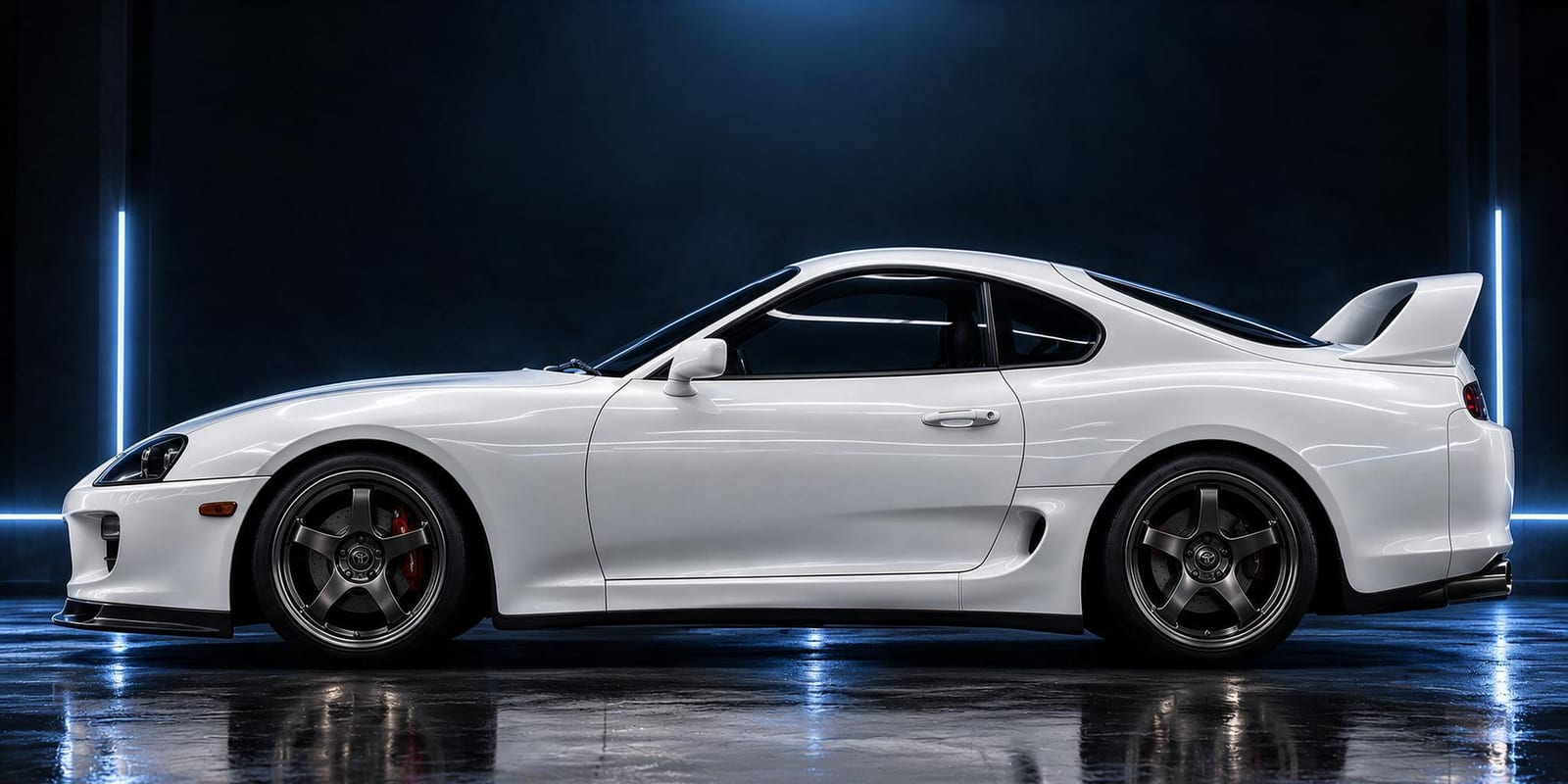 Toyota · 1993-97Supra MK4 A80 Turbo (2JZ-GTE, non-VVT-i)2JZ-GTE (non-VVT-i)Toyota · 1997-02Supra MK4 A80 Turbo (2JZ-GTE VVT-i)2JZ-GTE VVT-iToyota · 1993-02Supra MK4 A80 NA (2JZ-GE)2JZ-GE (NA, VVT-i 1998+)
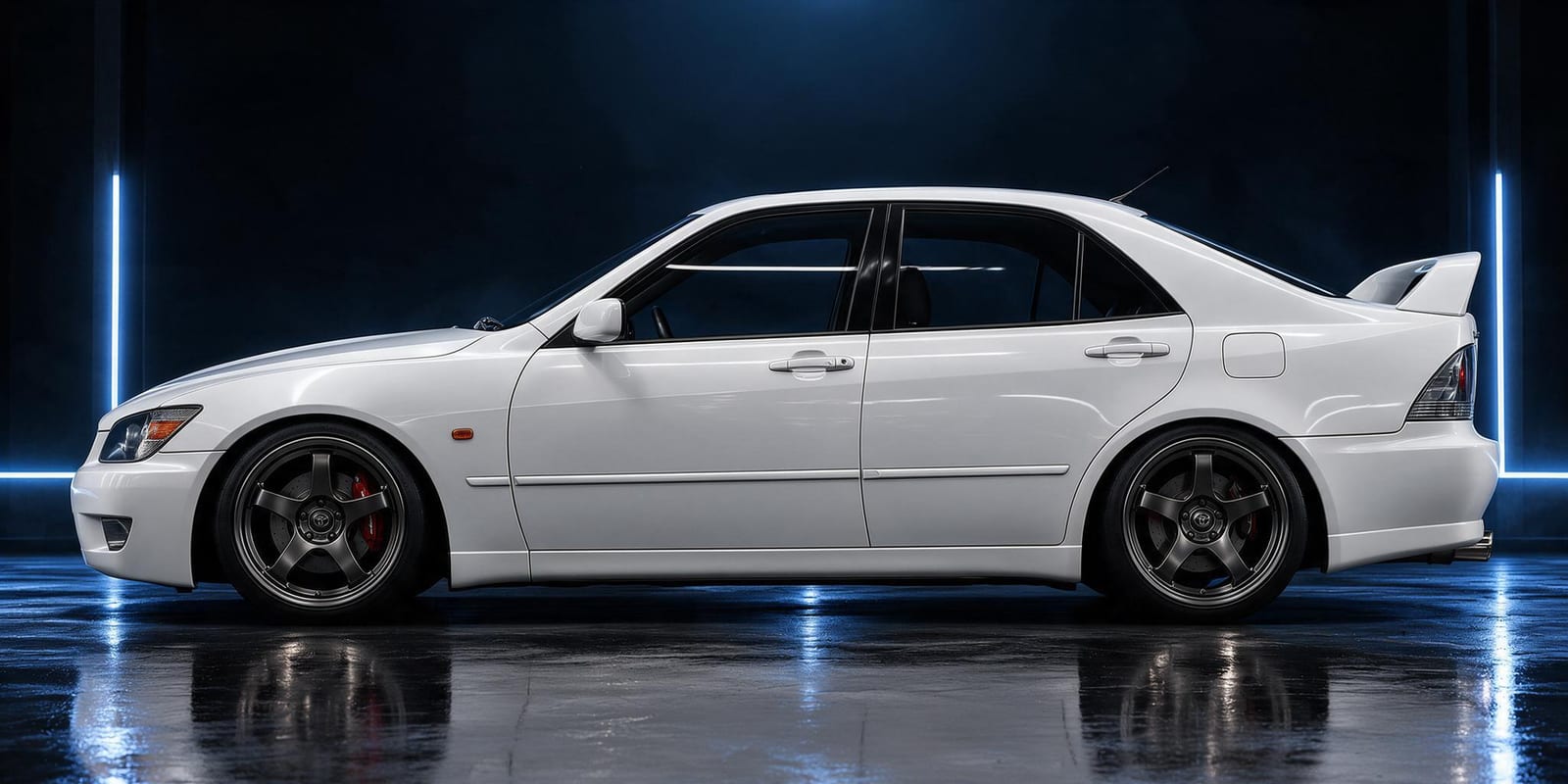 Lexus · 1998-05IS300 / GS300 XE10 / S160 2JZ-GE2JZ-GE (NA, VVT-i 1998+)
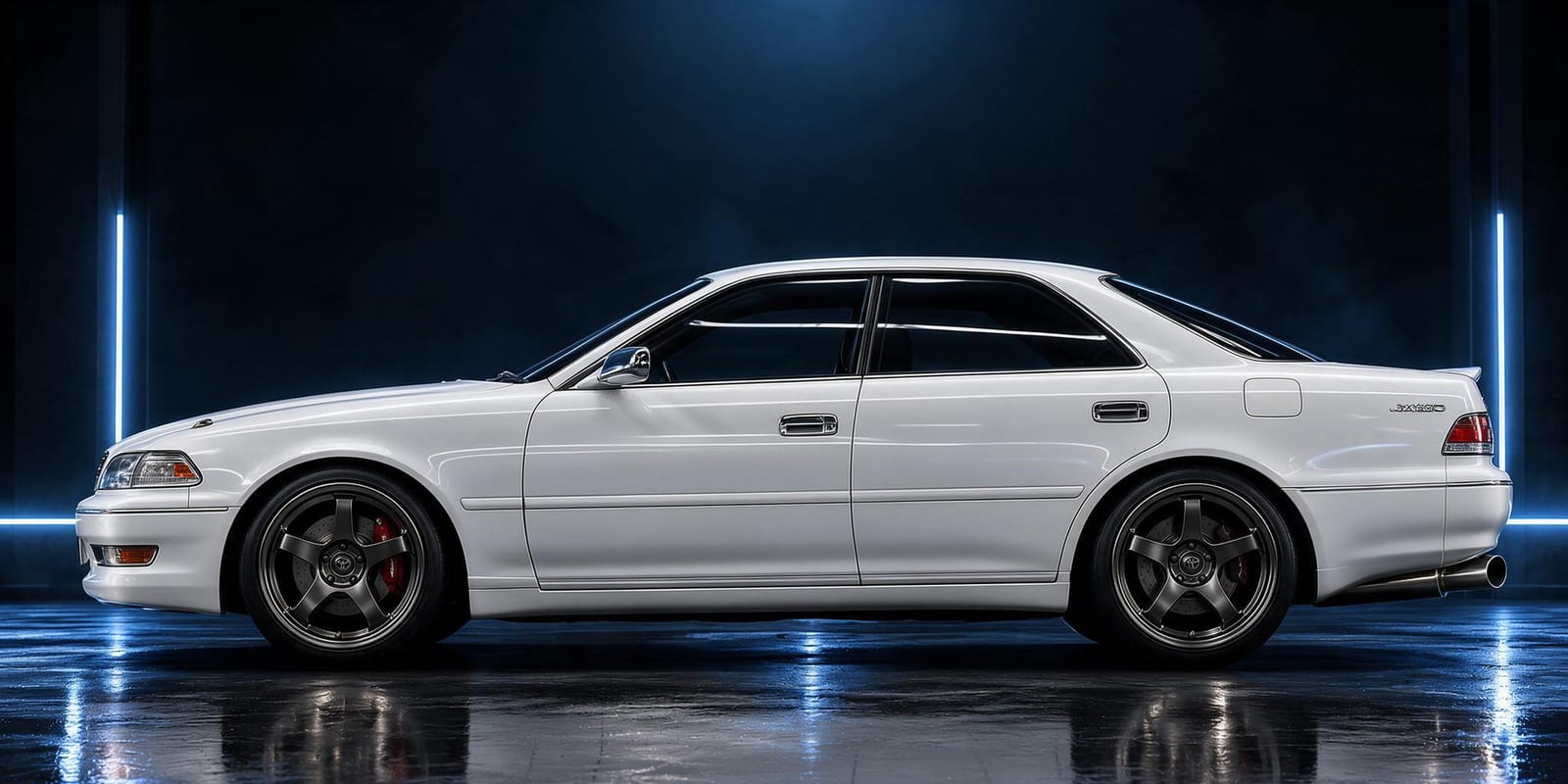 Toyota · 1990-01Chaser / Mark II / Soarer JZX90 / JZX100 / JZZ30 1JZ-GTE1JZ-GTE (twin / single VVT-i)Toyota · —JZ swap 1JZ / 2JZ2JZ-GTE (non-VVT-i)Toyota · 1991-97Aristo JZS147 3.0V (2JZ-GTE)2JZ-GTE (non-VVT-i)Toyota · 1997-04Aristo JZS161 V300 (2JZ-GTE VVT-i)2JZ-GTE VVT-iToyota · 2000-04Mark II JZX110 iR-V (1JZ-GTE VVT-i)1JZ-GTE (twin / single VVT-i)
GAINS on the Toyota JZ
ECU2
Designed so your phone is the laptop, keypad and dash
The GAINS app is designed to handle tuning, logging, gauges and switch inputs over Bluetooth, so the system needs no separate CAN keypad or display. Keypad, dash and logging views are planned; the iOS prototype runs on simulated data today.
Wideband, IMU and logging built in
An onboard Bosch LSU 4.9 wideband controller, a 6-axis IMU and onboard logging are designed into the ECU rather than sold as add-on modules.
Modular, so you buy what the engine needs
This engine runs on ECU2. PDM2 (power, body and gearbox) is optional and connects over ECU2's powered CAN port; the Telemetry Dongle Pro adds GPS lap timing from the OBD-II port.
Calibration that keeps learning
Instead of a fixed map that drifts as parts and conditions change, the ECU keeps adapting its fuel trims within limits you can see and approve in the app.
Adaptive tuning strategies
- VE learning closed loop on GAINS ECUs
Learns the fuel table from the onboard wideband as you drive, cell by cell, inside a signed authority envelope. Learned trims are promoted into the base map without a step in fuelling.
- Goal-based lambda targets closed loop on GAINS ECUs
Sets air-fuel targets from your goal (economy, response, power, safety margin) instead of a single fixed table.
- Knock protection protection
Listens for knock on a dedicated knock processor, pulls timing at once and restores it slowly. It only ever reduces advance.
- Warm-up, cranking, idle and transient fuel planned
The same learning approach applied to the tables tuners spend hours on after the main map is done.
- Spark advance and boost authority gated
Widening ignition advance or boost is never automatic. It stays an expert or dyno decision until validated knock detection exists for the engine family.
Already running another ECU? In advisor mode the same strategies read your logs and recommend exact table changes with the reasoning, which you apply in your ECU vendor's own software.
GAINS hardware is pre-release concept design. Simulated results only; nothing is validated on a vehicle yet.
Frequently asked
What is the 2JZ firing order?
1-5-3-6-2-4, with cylinder 1 at the timing-belt end. The same order applies to 1JZ and 2JZ, GE and GTE. Confirm against a factory manual for coil wiring.14
What is the difference between the 2JZ-GE and 2JZ-GTE?
Both are 2,997 cc, 86 x 86 mm DOHC 24-valve inline-sixes. The GE is naturally aspirated at about 10:1 (10.5:1 with VVT-i); the GTE is 8.5:1 with a sequential twin-turbo system, intercooler, low-impedance injectors and its own ECU and ignition hardware.112116
Does the 2JZ-GTE use a MAF or a MAP sensor?
The US-market Supra 2JZ-GTE uses a MAF meter with a built-in intake air temperature sensor, and also has a turbo pressure sensor read by the ECM. Japanese-market ECUs may differ, so check the specific ECU.68
Are stock 2JZ-GTE injectors high or low impedance?
Low impedance: about 1.95 ohm on the US Supra, run through an external solenoid resistor of about 6 ohm per circuit. Keep the resistor or use peak-and-hold drivers.6
How does Toyota VVT-i work on the JZ engines?
The ECU drives an oil control valve that sends oil pressure to an actuator in the intake cam pulley, continuously advancing or retarding the intake cam. Toyota quotes about 60 degrees of crank-angle range on the VVT-i 1JZ-GTE. The exhaust cam is fixed.2
When did the 2JZ get VVT-i?
Toyota lists VVT-i on the 2JZ-GE from September 1995. The 2JZ-GTE gained VVT-i in 1997 (Aristo first, then Supra).312
What is stock boost on a US Supra Turbo?
The 1995 repair manual's check value is 61-75 kPa (about 8.8-10.8 psi) at 5,600 rpm or above, full throttle, in first gear.10
Sources
Numbered as cited above. Hover or tap a citation chip to preview it.
- Development of Toyota JZ Type Engine Series (SAE 930881), A. Tanke, T. Sugiyama, A. Kotani · SAE International · sae-paper · retrieved 2026-10-25
- The Development of a New Turbocharged Engine with an Intelligent Variable Valve Timing System and New High Efficiency Turbocharger (Toyota technical paper, 1996; web transcription) · Toyota Motor Corporation (hosted by 3sgte.com) · oem · retrieved 2026-10-25
- 75 Years of Toyota: Engine technology development timeline · Toyota Motor Corporation · oem · retrieved 2026-10-25
- 75 Years of Toyota: Vehicle lineage, Supra (JZA80) · Toyota Motor Corporation · oem · retrieved 2026-10-25
- Toyota launches all-new Supra (press release, 24 May 1993) · Toyota Motor Corporation · press · retrieved 2026-10-25
- 1997 Toyota Supra Repair Manual (RM502U), SFI (2JZ-GTE) section · Toyota Motor Corporation (copy hosted at personal.tcu.edu) · service-manual · retrieved 2026-10-25
- Toyota Supra A80 repair manual: Terminals of ECM, 2JZ-GE engine (based on RM502U, 1997) · Toyota Motor Corporation (reproduced by toyota-supra.de) · service-manual · retrieved 2026-10-25
- Toyota Supra repair manual (1995 model), 2JZ-GTE engine troubleshooting: standard value of ECM terminals and ECM data (pages EG-510 to EG-513) · Toyota Motor Corporation (page images reproduced by toyota-supra.de) · service-manual · retrieved 2026-10-25
- Toyota Supra repair manual (1995 model), Ignition system 2JZ-GTE (pages IG-19 to IG-31) · Toyota Motor Corporation (page images reproduced by toyota-supra.de) · service-manual · retrieved 2026-10-25
- Toyota Supra repair manual (1995 model), Turbocharger system 2JZ-GTE (pages EG-140 to EG-162) · Toyota Motor Corporation (page images reproduced by toyota-supra.de) · service-manual · retrieved 2026-10-25
- 2002 Lexus IS 300 Specifications and Features · Lexus Canada (Toyota Canada Inc.) · oem · retrieved 2026-10-25
- The Toyota JZ Engine Guide (Michael Knowling) · AutoSpeed (Web Publications Pty Ltd), archived copy · press · retrieved 2026-10-25
- Toyota JZ engine · Wikipedia · community · retrieved 2026-10-25
- Toyota 3.0L 2JZ firing order · reRev · community · retrieved 2026-10-25